
Protein Purification Reagents and Kits


Sigma Aldrich Cross-shaped Channel Chip - 400 ?m Channel Fluidic 395 Pmma With Luer Interface
MilliporeSigma Sigma Organics products encompass a wide range of quality reagents, solvents, catalysts, and building blocks for organic synthesis. From benchtop discovery to process development and scale-up, Sigma Organics solutions are built to meet the needs of synthetic chemists.


Sigma Aldrich Cross-shaped Channel Chip - 75 ?m Channel (double T-junction) Fluidic 202 Pmma With Luer Interface
MilliporeSigma Sigma Organics products encompass a wide range of quality reagents, solvents, catalysts, and building blocks for organic synthesis. From benchtop discovery to process development and scale-up, Sigma Organics solutions are built to meet the needs of synthetic chemists.
Sigma Aldrich Cross-shaped Channel Chip - 400 ?m Channel Fluidic 395 Cyclic Olefin Copolymer (coc) With Luer Interface
MilliporeSigma Sigma Organics products encompass a wide range of quality reagents, solvents, catalysts, and building blocks for organic synthesis. From benchtop discovery to process development and scale-up, Sigma Organics solutions are built to meet the needs of synthetic chemists.

Promega NanoBRET™ Nano-Glo™ Detection System
The NanoBRET Nano-Glo™ Detection System provides the NanoBRET Nano-Glo™ Substrate used by NanoLuc Luciferase to generate the donor signal and the HaloTag™ NanoBRET 618 Ligand for the fluorescent energy acceptor.

Promega NanoBRET™ BRD4/Histone H3.3 Interaction Assay
The NanoBRET Bromodomain BRD4/Histone Interaction Assays enable interaction studies of BRD-containing proteins with full-length histones in the context of natural chromatin.
Sigma Aldrich Droplet Generator Chip - Four Elements Per Chip Design Fluidic 537 Coc
MilliporeSigma Sigma Organics products encompass a wide range of quality reagents, solvents, catalysts, and building blocks for organic synthesis. From benchtop discovery to process development and scale-up, Sigma Organics solutions are built to meet the needs of synthetic chemists.

Promega HaloTEV™ Protease
HaloTEV Protease (81kDa) is a fusion between the HaloTag™ protein and TEV protease, a highly specific proteolytic enzyme that cleaves at a specific TEV site, a specific seven-amino-acid sequence (ENLYFQ(G/S)).

Promega NanoBRET™ Nano-Glo™ Substrate
The NanoBRET™ Nano-Glo(R) Substrate is the substrate used by NanoLuc(R) Luciferase to generate the donor signal in several NanoBRET™ Assays.

Promega NanoBRET™ Positive Control
The NanoBRET Positive Control Vector encodes a NanoLuc-HaloTag™ fusion protein that tethers together the NanoLuc donor and HaloTag™ acceptor proteins to ensure efficient energy transfer.
Promega Proteasome-Glo™ Assays
The Proteasome-Glo™ Cell-Based Assays are homogeneous, luminescent assays that measure the chymotrypsin-like, trypsin-like and caspase-like protease activities associated with the proteasome complex in a purified enzyme preparation.
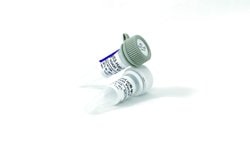
Promega NanoBRET™ PPI Control Pair (p53, MDM2)
The NanoBRET PPI Control Pair (p53, MDM2) is an optimized pair of vectors designed to measure the interaction of protein partners p53 and MDM2 using the NanoBRET assay.

Promega HaloTag™ Mammalian Protein Purification System
HaloTag™ Mammalian Protein Purification System is an optimized kit for purification of HaloTag™ fusion proteins from mammalian cell culture lysates. HaloTag™ Mammalian Protein Detection and Purification System also includes HaloTag™ TMRDirect Ligand.
Sigma Aldrich Droplet Generator Chip - One Channel Design Fluidic 162 Pc
MilliporeSigma Sigma Organics products encompass a wide range of quality reagents, solvents, catalysts, and building blocks for organic synthesis. From benchtop discovery to process development and scale-up, Sigma Organics solutions are built to meet the needs of synthetic chemists.
Sigma Aldrich Cross-shaped Channel Chip - 75 ?m Channel (double T-junction) Fluidic 202 Cyclic Olefin Copolymer (coc) With Luer Interface
MilliporeSigma Sigma Organics products encompass a wide range of quality reagents, solvents, catalysts, and building blocks for organic synthesis. From benchtop discovery to process development and scale-up, Sigma Organics solutions are built to meet the needs of synthetic chemists.